BAS codes are used in Jiwa to identify how transaction lines should be reported for Business Activity Statement purposes.
This article explains how BAS codes are used in Jiwa, including how they are assigned to transaction lines and how they flow through to General Ledger journal sets for BAS reporting.
Understanding BAS codes is important because the BAS reports rely on the BAS code assigned to each applicable transaction line. This includes transaction lines created from debtor invoices, creditor invoices, purchase transactions, and General Ledger journal entries.
Important
BAS reporting in Jiwa is based on the BAS codes recorded on General Ledger journal lines. If a transaction has been created from another Jiwa module, check the source transaction first before making any General Ledger adjustments.
Overview
In Jiwa all transactions are assigned a BAS code at the line level, this includes not only Debtor and Creditor invoices but also General Ledger journals. This is because all BAS reporting is controlled through the General Ledger and not the sub ledgers.
When reviewing journal sets you will notice that each line is assigned a BAS code and it is this code that is used by the BAS function within Jiwa.
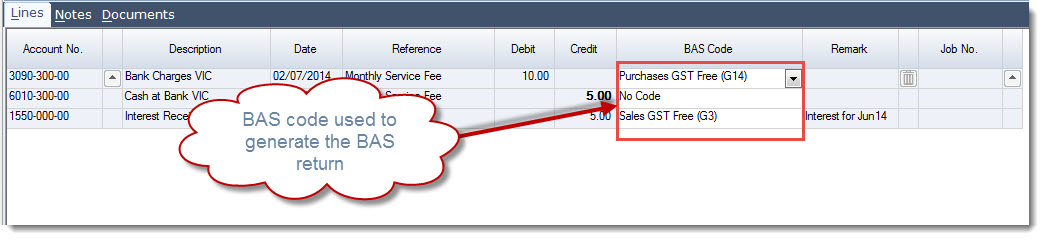
Journal sets are only created in the General Ledger when the originating transaction has been activated.
Lines assigned a BAS code of 'No Code' are not taken up in your BAS return and would typically represent lines that are not reportable.
Note
When entering transactions with mixed supply it is important that the line is split and the correct BAS code assigned to each line.
The GST amount must never be overridden as your BAS return will not report correctly. The only exception to this rule relates to the processing of VOTI or GST invoices from your freight forwarder.
If you have any further questions relating to mixed supply please contact Opal Logic on 1300 456 725 or send an email to support@opallogic.com.au
Maintaining BAS Codes
When your database is first set-up your Jiwa implementing consultant would have checked to ensure that all default BAS codes have been set-up and are linked to the correct General Ledger accounts.
Creating additional BAS codes if required or maintaining existing codes can be completed through the Tax Configuration form.
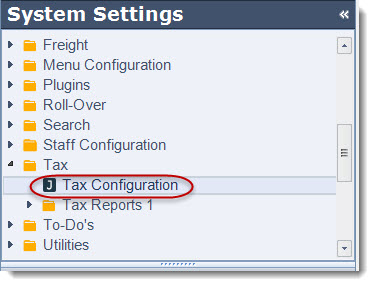
To begin select System Settings | Tax | Tax Configuration
On the Tax Configuration form 4 tabs are displayed each representing different types of BAS codes
|
Tab |
Description |
|
GST Inwards |
These codes are used as part of the purchasing process and are applicable to the following transaction types;
|
|
GST Outwards |
These codes are used as part of the sales process and are applicable to the following transaction types;
|
|
GST Adjustments Inwards |
These codes are used when processing purchase adjustments and are applicable to the following transaction types;
|
|
GST Adjustments Outwards |
These codes are used when processing sale adjustments and are applicable to the following transaction types;
|
Before commencing determine what type of BAS code is required and move to the respective tab.
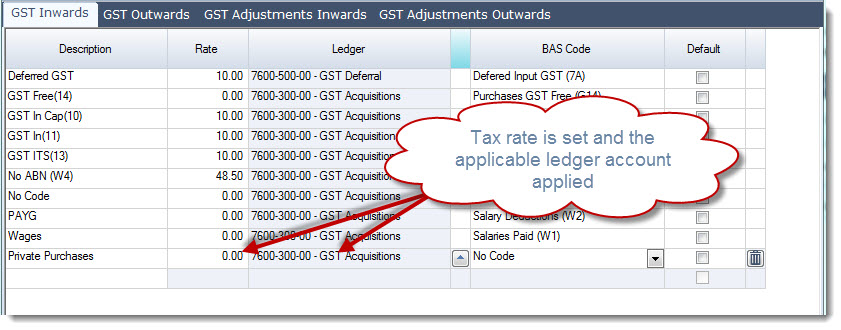
In the following example a new GST Inwards (or purchase code) will be created.
Move to the last available line and enter in a description for your new code.
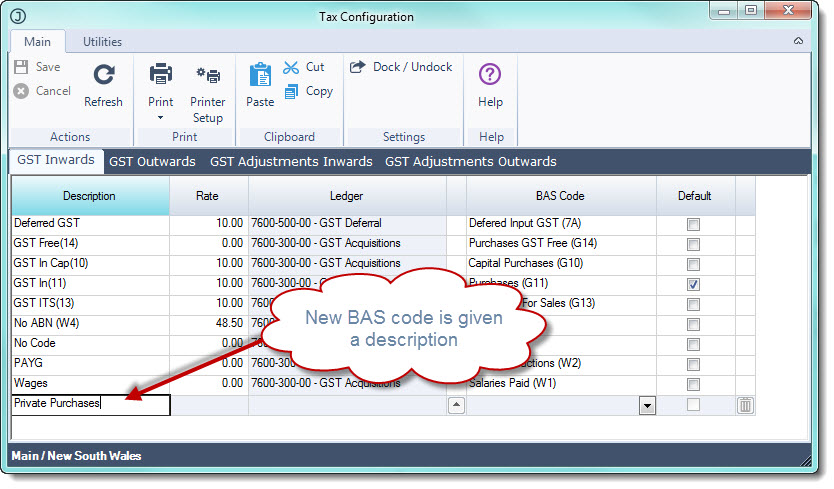
Enter the applicable tax rate in the Rate field and select the applicable General Ledger account
Typically this would be set to your GST Paid account however if you are not sure please check with your accountant
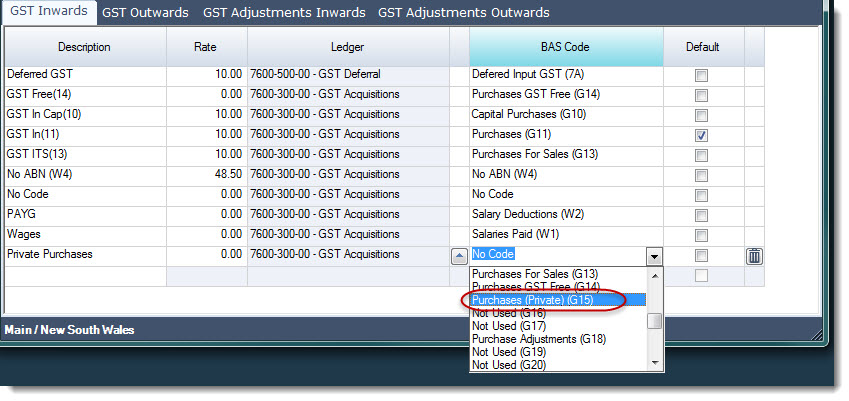
Now link your new code to the relevant BAS code.
BAS codes relate to those codes that you find on your 'GST calculation worksheet for BAS' as published by the ATO. Again if you are not sure please check with your Accountant
In the example below I have created a new code for private purchases so I have linked the new code to Purchases (Private) which appears in the G15 field on the GST calculation worksheet for BAS.
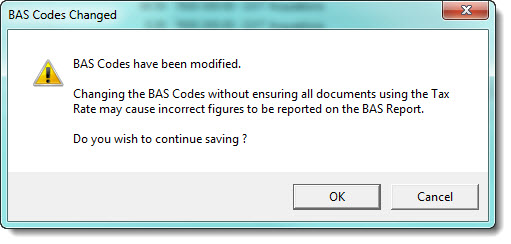
Once you have completed your changes select Save at this point the following message will appear select OK if you are confident that the change you have made will not impact any existing transactions.