In this article we will look at how to check if the Debtors Ledger reconciles to the control account in the General Ledger and how to identify any variances.
There are two (2) types of reconciliation reports that are available in Jiwa, this article will look at both reports and their uses.
Debtors Reconciliation Report
The Debtors Reconciliation report is a summary report that can be used to check that your Debtors Ledger reconciles to the control account in the General Ledger.
This report is a useful end of month check and can also be run for a specific date.
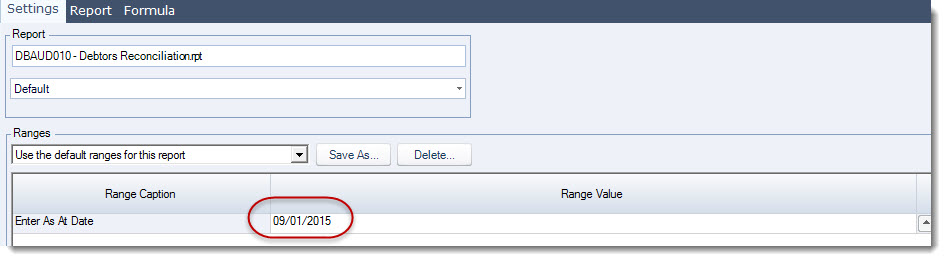
Select Debtors | Reports | Debtors Reconciliation

Set your required date

Debtors GL Reconciliation Report
The Debtors GL Reconciliation report is a more detailed report and can be used to;
-
Reconciliation the movement in the ledgers for the selected period/(s), and
-
Assist in identifying transaction types that are causing variances
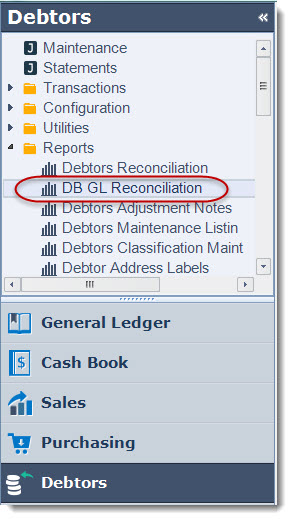
Select Debtors | Reports | DB GL Reconciliation
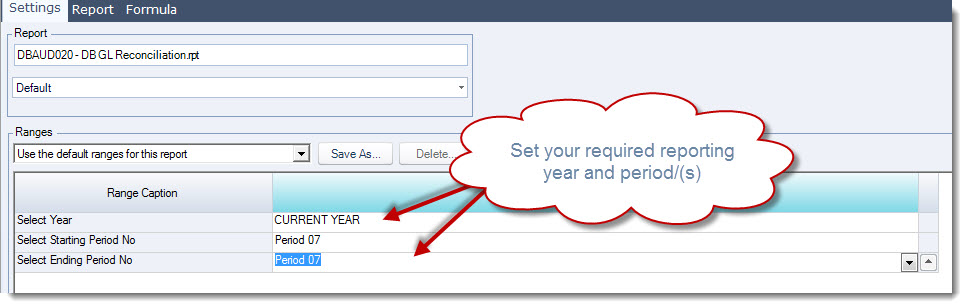
Select the year and period the report is to be run for
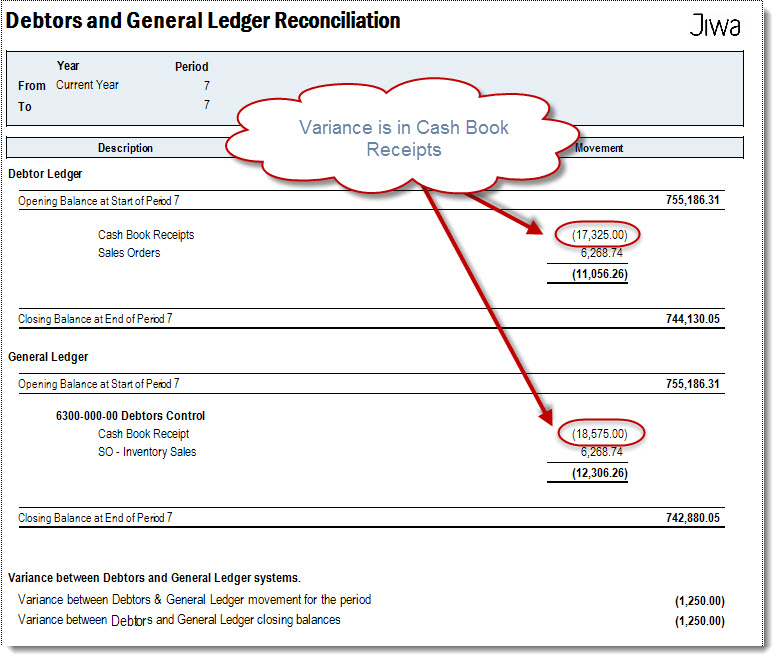
In the example below we can see that the variance between our Debtors Ledger and the General Ledger is in Cash Book Receipts.
Identifying the Transactions
To help us identify the transactions that are causing the variance we are going to compare the following two (2) reports
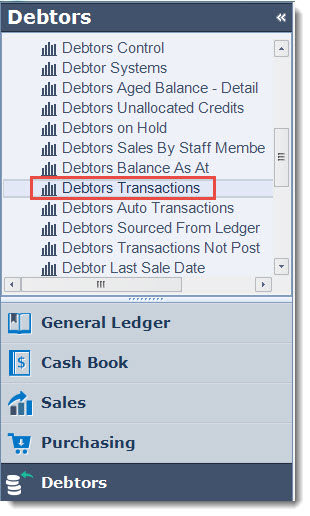
Debtors Transactions
Select Debtors | Reports | Debtors Transactions
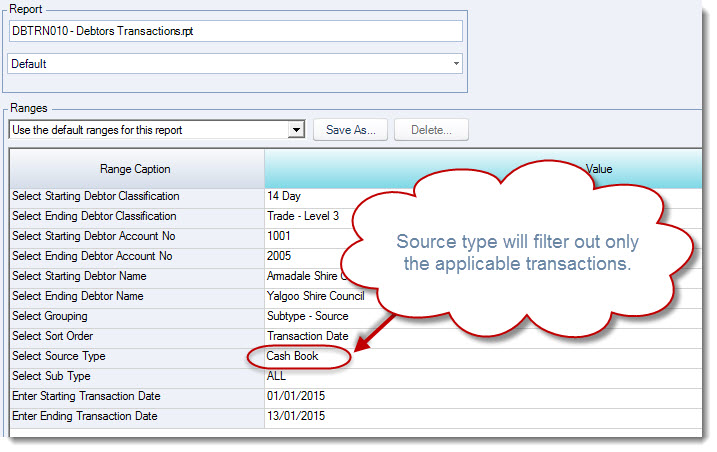
Set our report ranges. In this example our variance is in the Cash Book so the Source Type is set to Cash Book.
Set your report Start and End dates.
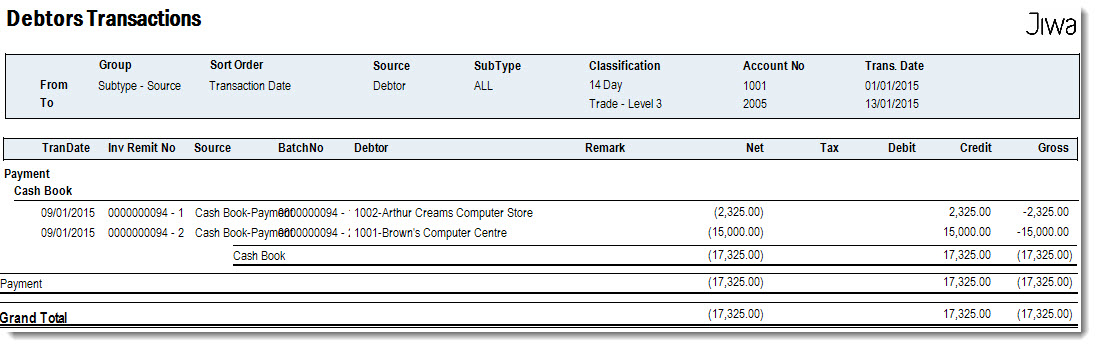
Print or export your report to Excel.
Your reports Gross Total should match the Cash Book Receipts total on your on your Debtors and General Ledger Reconciliation report.
General Ledger Listing with Source Report
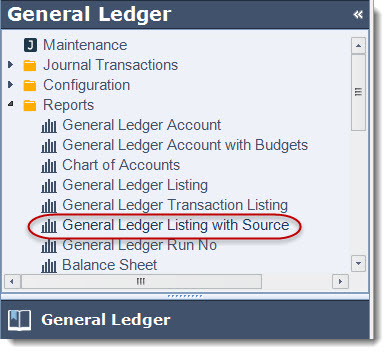
Select General Ledger | Reports | General Ledger Listing with Source
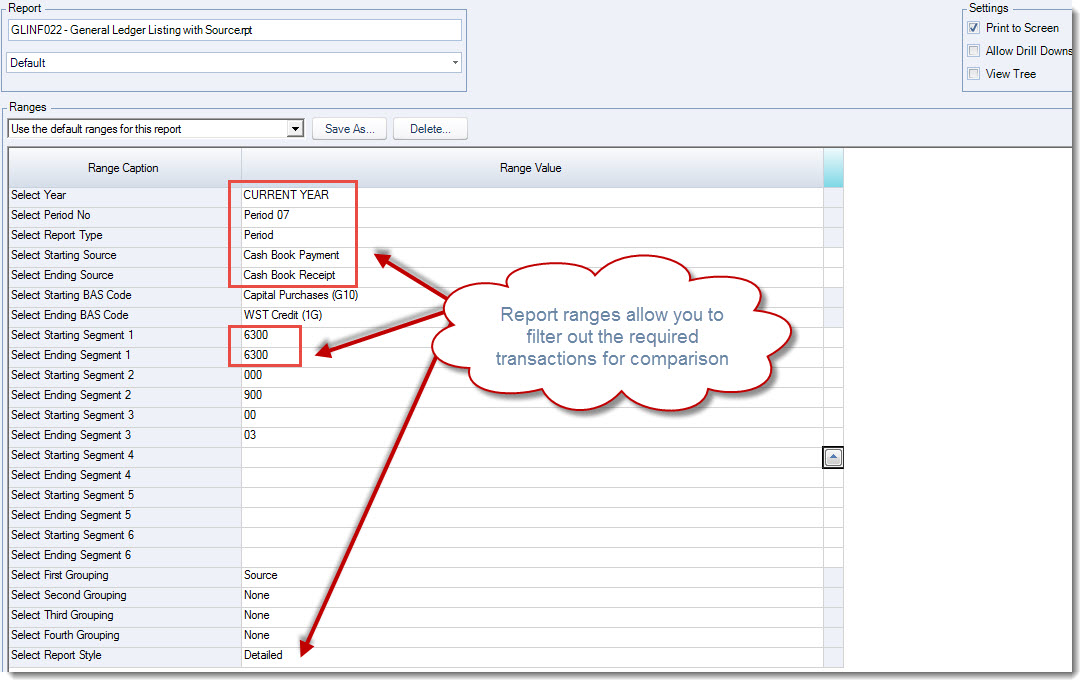
Set your report ranges.
Because we are reconciling our Debtors Control account the following ranges are set.
|
Field |
Description |
|
Year / Period No |
Set your year and period |
|
Starting Source |
This is set to Cash Book Payment because the variance is in the Cash Book |
|
Ending Source |
This is set to Cash Book Receipts because the variance is in the Cash Book and we need to ensure that all Cash Book transactions are included |
|
Starting / Ending Segment 1 |
The starting and ending segments are set to the Debtors Control account and segment 1 range is used because segment 1 represents the GL account number |
|
First Grouping |
This is handy if you are looking at a large number of transactions |
|
Report Style |
This is set to Detailed to display individual transactions. |
Print or export your report to Excel.
Your reports Total Movement should match the Cash Book Receipts total for the Debtors Control account on your on your Debtors and General Ledger Reconciliation report.

Comparing the two (2) reports we can very quickly see that there is an entry in the Debtors control account that is not in the Debtors Ledger.
Investigating the Problem Transactions
Having identified the problem transaction/(s) we can now look at why these transactions are causing a variance.
Open your Journal Set form and load the required journal set.
From the journal set you can drill down into the source document by clicking on the hyper link in the Source field.
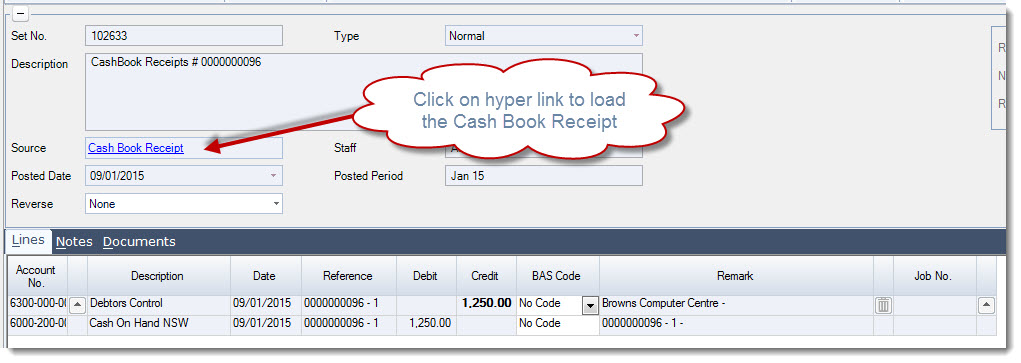
We can see from the Cash Book entry that the payment was not linked to a Debtor but it was posted to the Debtors control account.
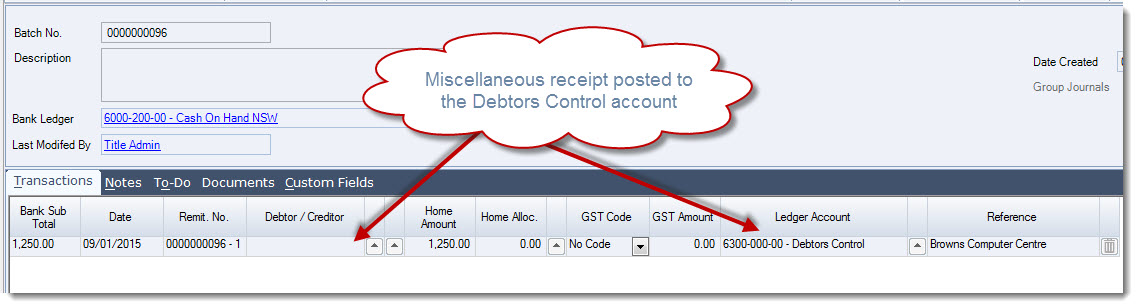
The transactions will need to be reversed and entered correctly.
This video is best seen on the full screen. Just click on the icon at the bottom right of the video (see image below). To exit full screen just press escape